




How to Choose Polycarbonate Roof Screws? Installation, Sealing, and Durability Guide
Polycarbonate roof screws are small components, but they play a major role in the long-term performance of a roofing system. When polycarbonate sheets are installed on patios, carports, greenhouses, canopies, walkways, or outdoor structures, the wrong screws can lead to leaks, cracking, sheet movement, or premature roof failure.
Unlike metal roofing or standard plastic panels, polycarbonate expands and contracts with temperature changes. This means the screw type, washer quality, hole size, fastening pressure, and spacing must all be planned carefully. Choosing the right polycarbonate roofing screws helps secure the panels while allowing controlled movement, improving both water resistance and durability.
Contents
- One: What are polycarbonate roof screws?
- Two: What types of screws are used for polycarbonate roofing?
- Three: How to install polycarbonate roof screws correctly?
- Four: What are common mistakes when using polycarbonate roof screws?
- Five: How to choose durable polycarbonate roof screws?
- Six: What accessories are needed with polycarbonate roof screws?
- Seven: How to select a supplier for polycarbonate roof screws?
- Conclusion
- FAQ
One: What are polycarbonate roof screws?
Why do polycarbonate sheets need special roof screws?
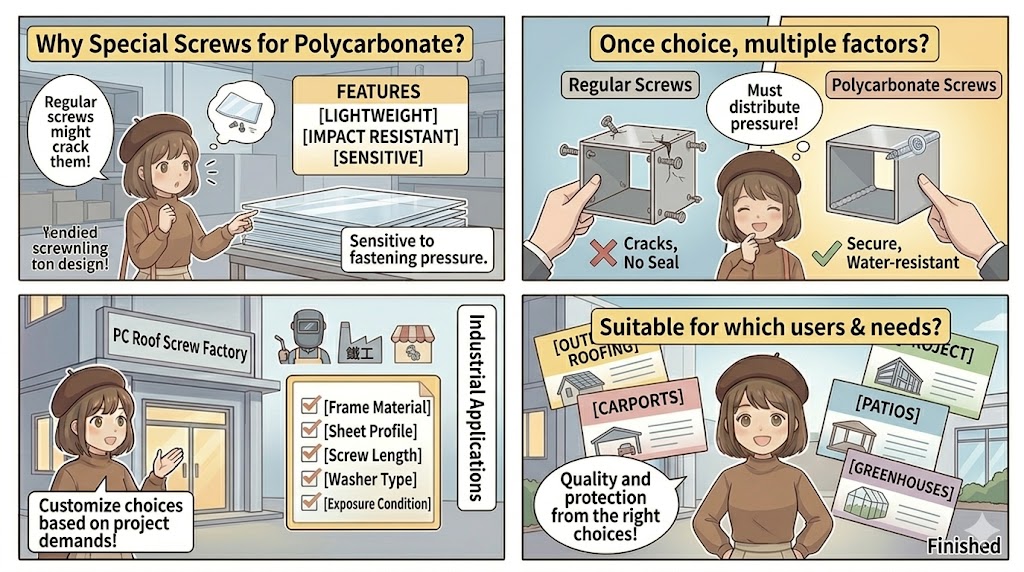
Polycarbonate sheets are lightweight, impact-resistant, and commonly used for outdoor roofing, but they are also sensitive to improper fastening. If the screws are too tight, too small, or installed without proper washers, the panels may crack or deform over time.
Special polycarbonate roof screws are designed to fasten the sheets securely while reducing pressure damage. They are usually paired with sealing washers to prevent water from entering through the screw holes.
What is the difference between standard screws and polycarbonate roofing screws?
Standard screws may not provide enough sealing or movement allowance for roofing sheets. They may also rust quickly outdoors or place too much pressure on the sheet surface.
Polycarbonate roofing screws are typically selected based on the roofing sheet profile, frame material, washer type, screw length, and exposure conditions. They are not only used to hold the sheet in place but also to protect the panel around the fixing point.
Why are washers important for polycarbonate roof installation?
Washers help distribute pressure around the screw hole and create a water-resistant seal. Without a proper washer, rainwater may enter through the fixing point, or the screw head may damage the sheet surface.
EPDM washers are commonly used because they provide flexibility, weather resistance, and better sealing performance. For polycarbonate roofing, washer quality is just as important as screw quality.
Two: What types of screws are used for polycarbonate roofing?
Are self-drilling screws suitable for polycarbonate roof sheets?
Self-drilling screws can be suitable when fixing polycarbonate sheets to metal frames, but the sheet itself often still needs proper hole preparation. The frame material and sheet type determine whether self-drilling screws are appropriate.
For many installations, the frame may be drilled by the screw, but the polycarbonate sheet should have an oversized or pre-drilled hole to allow thermal expansion. This helps reduce stress around the fixing point.
What is the difference between timber screws and metal roofing screws?
Timber screws are designed for fixing sheets to wooden frames, while metal roofing screws are designed for steel or aluminum structures. The main difference is in the thread design, drilling point, and holding performance.
Using the wrong screw type may reduce fastening strength. For example, a screw designed for timber may not grip metal properly, while a metal screw may not perform well in wooden purlins.
Should polycarbonate roof screws use EPDM washers?
Yes, EPDM washers are commonly recommended for roofing applications because they help seal against water and resist outdoor weathering. A good washer should remain flexible and stable under sunlight, rain, and temperature changes.
Poor-quality washers may harden, crack, or shrink over time, allowing water to enter around the screw. For outdoor roofing, washer durability should not be overlooked.
Three: How to install polycarbonate roof screws correctly?
Should holes be pre-drilled before fixing polycarbonate sheets?
In many cases, yes. Pre-drilling helps reduce stress and prevents the screw from forcing its way through the sheet. This is especially important for thicker sheets, corrugated sheets, or multiwall polycarbonate panels.
The drilled hole should usually be slightly larger than the screw shaft to allow expansion and contraction. If the hole is too tight, temperature movement may cause cracking around the fixing point.
Why should screw holes allow room for thermal expansion?
Polycarbonate expands and contracts with temperature changes. If the sheet is fixed too tightly or the screw holes are too small, the panel cannot move naturally.
Over time, this can lead to cracks, warping, noise, or panel distortion. Allowing room for movement helps the roof remain stable while reducing stress on the sheet.
How tight should polycarbonate roof screws be fastened?
Polycarbonate roof screws should be tightened enough to hold the sheet securely and compress the washer slightly, but not so tight that the washer bulges or the sheet surface dents.
Overtightening is one of the most common causes of roof problems. A screw that is too tight may damage the washer, crack the sheet, or block natural sheet movement.
Four: What are common mistakes when using polycarbonate roof screws?
What happens if screws are overtightened?
Overtightened screws can crush the washer, deform the sheet, or create stress cracks around the hole. At first, the installation may look firm, but problems often appear after temperature changes, wind movement, or repeated rainfall.
A properly installed screw should secure the panel without forcing the sheet down too aggressively. The washer should sit flat and seal evenly.
Can incorrect screw spacing cause leaks or sheet movement?
Yes. If screws are spaced too far apart, the sheet may lift, vibrate, or move during strong wind. If screws are placed too close together, the sheet may have too many stress points.
Correct spacing depends on the sheet profile, roof pitch, wind exposure, and frame layout. The manufacturer’s installation guidance should always be followed when available.
Why does poor washer quality lead to water penetration?
The washer is the main sealing component around the screw hole. If the washer cracks, hardens, shifts, or fails to compress properly, water may seep through the roof fixing point.
Low-quality washers may work at first but fail quickly under UV exposure, rain, or heat. For long-term roofing performance, durable sealing washers are essential.
Five: How to choose durable polycarbonate roof screws?
Why is corrosion resistance important for outdoor roofing screws?
Roof screws are constantly exposed to moisture, sunlight, and temperature changes. If the screws rust, they may weaken, stain the sheets, damage the washer, or become difficult to remove during maintenance.
For outdoor polycarbonate roofing, corrosion-resistant screws are usually preferred. This is especially important in coastal areas, industrial environments, or places with high humidity.
Are stainless steel or coated screws better for roofing projects?
Stainless steel screws offer strong corrosion resistance and are often used for demanding outdoor environments. Coated screws can also perform well if the coating is designed for roofing exposure.
The better option depends on the project budget, exposure level, frame material, and expected service life. For long-term roofing projects, it is usually worth choosing higher-quality fasteners.
What screw specifications should be checked before purchase?
Before purchasing, buyers should check screw length, diameter, thread type, head style, washer material, coating, corrosion resistance, compatibility with the frame material, and suitability for the sheet profile.
It is also important to confirm whether the screws are intended for timber, steel, aluminum, or other substrates. A screw that fits the sheet but not the frame may still fail during installation.
Six: What accessories are needed with polycarbonate roof screws?
When should sealing washers or gaskets be used?
Sealing washers or gaskets should be used whenever screws penetrate polycarbonate roofing sheets. They help seal the hole and reduce direct pressure between the screw head and the sheet surface.
For outdoor roofs, using screws without proper sealing washers increases the risk of leakage. The washer should be weather-resistant and compatible with the roofing material.
Do polycarbonate roofs need ridge caps, flashings, or closure strips?
Many polycarbonate roof systems require accessories such as ridge caps, side flashings, end caps, closure strips, or sealing tapes. These components help protect sheet edges, prevent water entry, and improve the overall finish.
Screws alone cannot solve all waterproofing issues. A complete roofing system should include both proper fasteners and suitable edge-sealing accessories.
Why is compatible sealant important for polycarbonate roofing?
Not all sealants are suitable for polycarbonate. Some chemicals may damage the sheet, reduce clarity, or cause surface stress cracking.
When sealant is needed, it should be compatible with polycarbonate roofing. This is especially important around flashings, joints, edges, and penetrations.
Seven: How to select a supplier for polycarbonate roof screws?
What should buyers check when comparing roofing fastener suppliers?
Buyers should check screw material, coating quality, washer type, product specifications, available sizes, packaging, bulk order options, and whether the supplier understands roofing applications.
A good supplier should be able to recommend screws based on sheet type, frame material, outdoor exposure, and installation needs, rather than only offering a generic screw.
Why are material quality and product specifications important?
Small differences in screw material, washer quality, or coating can affect long-term roof performance. Poor-quality fasteners may rust, loosen, leak, or damage the sheet after installation.
Clear specifications also make purchasing more consistent, especially for contractors, distributors, and roofing projects that require repeat orders.
How can contractors choose reliable screws for long-term roofing use?
Contractors should choose screws that match the sheet profile, frame material, roof environment, and expected service life. They should also test the fit, washer compression, drilling performance, and installation consistency before large-scale use.
For professional roofing work, reliable screws reduce call-backs, leakage complaints, and maintenance issues. The right fastener is a small cost compared with repairing a failed roof.
Conclusion
Polycarbonate roof screws play an important role in securing roofing sheets while preventing leaks, cracking, and installation failure. Since polycarbonate expands and contracts with temperature changes, the screws, washers, hole size, and fastening pressure must be selected carefully.
High-quality screws with corrosion-resistant materials and reliable sealing washers can improve roof durability, especially for outdoor structures exposed to rain, sunlight, and wind. Before installation, it is important to confirm the sheet type, frame material, screw length, washer quality, spacing, and sealing method to ensure the roof remains stable and watertight over time.
FAQ
Q: What screws should be used for polycarbonate roofing?
A: Polycarbonate roofing should use corrosion-resistant roof screws matched to the frame material, usually with suitable sealing washers such as EPDM washers.
Q: Do polycarbonate roof sheets need pre-drilled holes?
A: In many installations, yes. Pre-drilled holes help reduce stress and allow the sheet to expand and contract with temperature changes.
Q: Can I use normal roofing screws on polycarbonate sheets?
A: It is not recommended unless the screws are suitable for polycarbonate roofing and include proper sealing washers. Standard screws may cause leaks or sheet damage.
Q: How tight should polycarbonate roof screws be?
A: They should be tight enough to hold the sheet and seal the washer, but not so tight that the washer deforms or the sheet surface dents.
Q: Why do polycarbonate roof screws need washers?
A: Washers distribute pressure and help seal the screw hole against water. They also reduce direct stress on the polycarbonate sheet.
Q: How do I prevent leaks around polycarbonate roofing screws?
A: Use the correct screws, high-quality sealing washers, proper pre-drilled holes, correct screw spacing, and avoid overtightening. Flashings and compatible sealants may also be needed around edges and joints.
